Go to Volume 1 - VOLUME 2
Welcome to Tiny Tales from Africa: The Animals (volume 2). This is a collection of two hundred stories from Africa featuring animal characters, and each story is just 100 words long. You can find volume 1 here too!
In addition, you might also be interested in The Reader's Guide to African Folklore at the Internet Archive, and also Texts of African Proverbs and Riddles in the Public Domain.

Creative Commons. This work is released with a Creative Commons license: CC BY-NC-SA 4.0. That means you can remix and reuse individual stories or the contents of the whole book with attribution for non-commercial purposes, provided that you release your work with the same license. Find out more.
Attribution: Tiny Tales from Africa: The Animals (volume 2) by Laura Gibbs.
Version: January 20 2022

You can access the book in a variety of formats, along with individual stories here at the blog; see story title list and links below. You can also find the online sources and image credits listed separately.
Pressbooks. This is a web-based presentation of the book with all the stories on one page.
PDF. You can download a PDF copy of the book.
EPUB. You can use this EPUB file for ebook readers like Nook, etc. You can also read epubs on your Kindle.
HTML. If you want to read a web-based presentation, this is a clean and simple HTML version. This version is also useful if you want to copy-and-paste some or all of the content to adapt for your own purposes (see CC-licensing information above).
Audiobook. There is a free audiobook available at SoundCloud. I'll also be releasing the mp3 files available for download if you prefer not to use SoundCloud; I'll update this page when those files are available.
Internet Archive. There is a copy of the book at the Internet Archive which is great for searching. So, for example, here are the elephants.
Kindle. You can purchase a Kindle edition from Amazon for $1.99; I'll update this page when the Kindle is ready. (I'm not sure why it is $1.99 instead of the usual 99 cents; I think I may have crossed a file size threshold by using more images in the book this time.)
Paperback. You can order a paperback edition from Amazon (free Prime shipping) for $6.99.
~ ~ ~
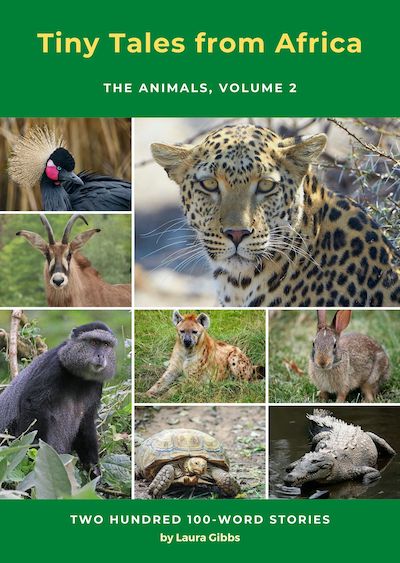
TINY TALES FROM AFRICA: THE ANIMALS
(volume 2)
A Book of Two Hundred 100-Word Stories
ABOUT THIS BOOK
This is the second in a series of books featuring African animal tales. You’ll find many tricksters here: there’s Rabbit (the ancestor of Brer Rabbit and Tio Conejo), along with Tortoise, Spider, and also Mouse-Deer, Neotragus pygmaeus, an African antelope barely a foot tall. There are “pourquoi” stories like how Warthog got his tusks and how Crab got his shell, plus stories of magic and supernatural adventure. These tales come from many different African traditions; see the list of sources in the back of the book. For even more information about each story, plus a free audiobook version, go to:
The paragraph you just read is 100 words long, as is this paragraph, and that’s also the length of each story in this book. The stories go fast, but you can slow down when you find one you like. Read it again. Read it aloud. Let it sink in. Maybe even write your own version of the story, using your imagination to add more details. Meanwhile, if you don’t like a story, don’t get bogged down; just move on to the next one. You can find many more African animal tales, along with 100-word stories from other cultural traditions, here:
BLOG POSTS
The individual blog posts contain additional information for each story.
1. Creator Gives Horns to the Animals
2. Why Chimpanzees Don't Have Farms
3. The Warthog and the Elephant
4. The Bird who Loved His Wife
5. The Beaks of the Kestrel and the Hornbill
6. The War of the Birds and the Snakes
7. The Mother of the Snakes
8. The Witch and the Crab
9. The Creation of Night
10. The Medicine of Immortality
11. The Bees and the Honeyguide Bird
12. The Bird Who Married a Bee
13. The Honeybadger and the Honeycomb
14. The Jackals and the Honeybadger's Beer
15. The Frog and the Elephant
16. The Lion and the Monkey
17. The Hen and the Hawk's Chick
18. The Hawk who Imitated the Hen
19. The Hippo who Imitated the Hen
20. The Elephant and the Child
21. The Donkeys Who Touch Noses
22. The Origin of the Suk-Suk Bird
23. The Chief and His People
24. The Origin of Baboons
25. The Origin of Chimpanzees
26. The Men Who Went Fishing
27. The Man Who Didn't Go to Funerals
28. The Man Who Loved Women
29. The Dove and the Handsome Man
30. Thunder and the Elephant
31. The Dispute of Night and Day
32. When People Returned from the Dead
33. The Bird Bearing God's Message
34. The Messages of the Chameleon and the Lizard
35. The Messages of the Chameleon and the Rabbit
36. The Moon's Messengers
37. The Baboon, the Python, and the Rabbit
38. When Rabbit and Baboon Were Friends
39. The Rabbit, the Lion, and the Ant-Hill
40. The Rabbit and the Lion Play a Game
41. The Rabbit and the Lion-Skin
42. The Rabbit and the Hyena
43. The Rabbit and the Hyena Go Hunting
44. The Rabbit and the Skunk
45. The Rabbit and the Elephant's Garden
46. The Rabbit, the Elephant, and the Hippo
47. The Rabbit Fools the Elephant (1)
48. The Rabbit Fools the Buffalo (2)
49. The Rabbit, the Leopard, and the Wolf
50. The Rabbit, the Hornbill, and the Party
51. The Rabbit, the Hornbill, and the Bread
52. The Rabbit, the Guinea-Fowl and the Farm
53. The Rabbit and the Bee
54. The Rabbit and The Python
55. The Rabbit, the Tortoise, and the Millet
56. The Rabbit, the Tortoise, and the Tunnel
57. The Rabbit and the Tortoise Run a Race
58. The Tortoise, the Elephant, and the Hippo
59. The Tortoise, the Buffalo, and the Elephant
60. The Tortoise and the Porcupine
61. The Tortoise and the Crane
62. Who Will Marry the King's Daughter?
63. Chimpanzee's Kola-Nuts
64. The Leopard's Kola-Tree
65. The Tortoise and His Kola-Nuts
66. When the Tortoise Wrestled the Leopard
67. The Tortoise and the Leopard Go Hunting
68. The Tortoise and the Leopard's Farm
69. The Leopard in the Tortoise's Garden
70. The Tortoise, the Leopard, and Their Drums
71. The Tortoise, the Leopard, and their Mothers
72. The Tortoise and the Antelope
73. The Tortoise and His Children
74. The Spider Puts on a Disguise (1)
75. The Spider, the Bushbuck, and the Rabbit (2)
76. The Wise Man, the Hyena, and the Spider (1)
77. The Spider, the Hyena, and the Saddle (2)
78. The Spider, The Hyena, and the Chain (3)
79. The Spider and the Deer
80. The Mouse-Deer and the King
81. The Mouse-Deer and the Medicine-Man
82. The Mouse-Deer and the Leopard
83. The Leopard and the Ram (1)
84. The Jackal, the Leopard, and the Ram (2)
85. The Leopard and the Goat
86. The Leopard and the Gazelle
87. The Leopard and His Dog
88. The Leopard and the Antelope's Wife
89. The Leopard and the Pangolin
90. The Leopard and the Cheetah
91. The Lion and the Fox
92. The Lion and the Baboon
93. The Lion and the Mule
94. The Lion and the Jackal
95. The Jackal and the Hyena
96. The Man and the Snake
97. The Hunter and the Antelope
98. The Scholar and the Monkey
99. The Mouse-Deer and the Python
100. The Squirrel and the Python
101. The Man Who Caught a Python
102. The Greedy Man and His Wife
103. The Fox and the Farmer
104. The Fox and the Raven
105. The Leopard and the Crane
106. The Birds Try to Shake the Tree
107. The Eagle, the Sparrow, and the Palm-Wine
108. The Bat and the Honey
109. The Jackal and the Rooster
110. The Rooster and the Wildcat
111. The Chicken and the Wildcat's Magical Charm
112. The Marriage of the Wildcat and the Chicken
113. The Wildcats and the Chickens
114. The Wildcat and the Rat
115. The Rat's Daughter and the Cat
116. The Lion and the Mouse
117. The Mice and the Cat
118. The Dog's Medicine
119. The Dog and the Fox Go to Town
120. The Dog and the Jackal
121. The Dog and the Goat
122. The Elephant, the Leopard, and the Goats
123. The Leopard and the Fox
124. The Old Leopard and the Goats
125. The Leopard and the Hawk
126. The Leopard and the Python
127. The Little Leopard and the Little Otter
128. King Leopard and the Deer
129. The Leopard and the Hyena
130. The Hyena Who Wanted to be King
131. The Hyena and the Moonbeam
132. The Lion, the Leopard, and the Hyena
133. The Elephant who Wrestled the Animals
134. The Elephant and the Turaco Bird
135. The Elephant and the Dog
136. The Chimpanzees Decide to Build Houses
137. The Bushbuck and the Goat
138. The Antelope and Her Child
139. The Antelope and the Monkey
140. The Hyrax's Warning
141. The Hyrax Who Learned to Climb
142. The Squirrel and the Nut
143. The Snake and the Scorpion
144. The Snake and the Frog
145. The Lizard and the Chameleon
146. The Man and the Ants
147. The Partridge and Her Eggs
148. The Crab and Her Children
149. The Bird and Her Chick
150. The Frog and the Chicken
151. The Rooster and the Crocodile
152. The Rooster, the Hawk, and the Eagle
153. The Rooster and the Fox
154. The Ostrich and the Lion
155. The Sparrow and the Monkey
156. The Woodpecker and the Weaverbird
157. The Turaco Who Didn't Listen
158. The Pigeon and the Tree-Branch
159. The Hornbill and the Yams
160. The Birds Who Went Canoeing
161. The Birds Who Needed Fire
162. The Birds Who Chose a King
163. The Tiny King of the Birds
164. The Rabbit and the Grasshopper
165. The Two Hunters
166. The Hunter and His Son
167. The Boy Named Red-Quail
168. The Masmeraye-Bird
169. The Wives Who Quarreled
170. The Woman and the Rabbit
171. The Man and His Monkey-Wife
172. The Jackals and Their Brides
173. The Hunter and the Antelope
174. The Boy Who Went Fishing
175. The Boys and the Singing Tree
176. The Boy and the Elephant
177. The Two Boys and the Snake
178. The Magical Korhaan-Bird
179. The Magical Head
180. The Hyena's Grindstone
181. The Hyena and the Prophet
182. King Solomon and the Birds
183. The Prophet Joseph and the Birds
184. The Shepherd and the Sheep
185. The Woman and the Crocodile
186. The Woman and the Lion
187. The Women Who Went Fishing
188. The Woman and the Hyena
189. The Hunter, the Zebra, and the Lion
190. The Wise Man and the Foolish Man
191. The Man and the Chicken
192. Long Ago, When Things Were Bigger
193. The Man and His Dogs
194. The King and His Cattle
195. Chief Mangeh and Her Cattle
196. The Father and His Son
197. The Man Who Slept
198. The Bird and Her Eggs
199. The Tortoise and His Debts
200. The Leopard, the Goat, and the Grass
2. Why Chimpanzees Don't Have Farms
3. The Warthog and the Elephant
4. The Bird who Loved His Wife
5. The Beaks of the Kestrel and the Hornbill
6. The War of the Birds and the Snakes
7. The Mother of the Snakes
8. The Witch and the Crab
9. The Creation of Night
10. The Medicine of Immortality
11. The Bees and the Honeyguide Bird
12. The Bird Who Married a Bee
13. The Honeybadger and the Honeycomb
14. The Jackals and the Honeybadger's Beer
15. The Frog and the Elephant
16. The Lion and the Monkey
17. The Hen and the Hawk's Chick
18. The Hawk who Imitated the Hen
19. The Hippo who Imitated the Hen
20. The Elephant and the Child
21. The Donkeys Who Touch Noses
22. The Origin of the Suk-Suk Bird
23. The Chief and His People
24. The Origin of Baboons
25. The Origin of Chimpanzees
26. The Men Who Went Fishing
27. The Man Who Didn't Go to Funerals
28. The Man Who Loved Women
29. The Dove and the Handsome Man
30. Thunder and the Elephant
31. The Dispute of Night and Day
32. When People Returned from the Dead
33. The Bird Bearing God's Message
34. The Messages of the Chameleon and the Lizard
35. The Messages of the Chameleon and the Rabbit
36. The Moon's Messengers
37. The Baboon, the Python, and the Rabbit
38. When Rabbit and Baboon Were Friends
39. The Rabbit, the Lion, and the Ant-Hill
40. The Rabbit and the Lion Play a Game
41. The Rabbit and the Lion-Skin
42. The Rabbit and the Hyena
43. The Rabbit and the Hyena Go Hunting
44. The Rabbit and the Skunk
45. The Rabbit and the Elephant's Garden
46. The Rabbit, the Elephant, and the Hippo
47. The Rabbit Fools the Elephant (1)
48. The Rabbit Fools the Buffalo (2)
49. The Rabbit, the Leopard, and the Wolf
50. The Rabbit, the Hornbill, and the Party
51. The Rabbit, the Hornbill, and the Bread
52. The Rabbit, the Guinea-Fowl and the Farm
53. The Rabbit and the Bee
54. The Rabbit and The Python
55. The Rabbit, the Tortoise, and the Millet
56. The Rabbit, the Tortoise, and the Tunnel
57. The Rabbit and the Tortoise Run a Race
58. The Tortoise, the Elephant, and the Hippo
59. The Tortoise, the Buffalo, and the Elephant
60. The Tortoise and the Porcupine
61. The Tortoise and the Crane
62. Who Will Marry the King's Daughter?
63. Chimpanzee's Kola-Nuts
64. The Leopard's Kola-Tree
65. The Tortoise and His Kola-Nuts
66. When the Tortoise Wrestled the Leopard
67. The Tortoise and the Leopard Go Hunting
68. The Tortoise and the Leopard's Farm
69. The Leopard in the Tortoise's Garden
70. The Tortoise, the Leopard, and Their Drums
71. The Tortoise, the Leopard, and their Mothers
72. The Tortoise and the Antelope
73. The Tortoise and His Children
74. The Spider Puts on a Disguise (1)
75. The Spider, the Bushbuck, and the Rabbit (2)
76. The Wise Man, the Hyena, and the Spider (1)
77. The Spider, the Hyena, and the Saddle (2)
78. The Spider, The Hyena, and the Chain (3)
79. The Spider and the Deer
80. The Mouse-Deer and the King
81. The Mouse-Deer and the Medicine-Man
82. The Mouse-Deer and the Leopard
83. The Leopard and the Ram (1)
84. The Jackal, the Leopard, and the Ram (2)
85. The Leopard and the Goat
86. The Leopard and the Gazelle
87. The Leopard and His Dog
88. The Leopard and the Antelope's Wife
89. The Leopard and the Pangolin
90. The Leopard and the Cheetah
91. The Lion and the Fox
92. The Lion and the Baboon
93. The Lion and the Mule
94. The Lion and the Jackal
95. The Jackal and the Hyena
96. The Man and the Snake
97. The Hunter and the Antelope
98. The Scholar and the Monkey
99. The Mouse-Deer and the Python
100. The Squirrel and the Python
101. The Man Who Caught a Python
102. The Greedy Man and His Wife
103. The Fox and the Farmer
104. The Fox and the Raven
105. The Leopard and the Crane
106. The Birds Try to Shake the Tree
107. The Eagle, the Sparrow, and the Palm-Wine
108. The Bat and the Honey
109. The Jackal and the Rooster
110. The Rooster and the Wildcat
111. The Chicken and the Wildcat's Magical Charm
112. The Marriage of the Wildcat and the Chicken
113. The Wildcats and the Chickens
114. The Wildcat and the Rat
115. The Rat's Daughter and the Cat
116. The Lion and the Mouse
117. The Mice and the Cat
118. The Dog's Medicine
119. The Dog and the Fox Go to Town
120. The Dog and the Jackal
121. The Dog and the Goat
122. The Elephant, the Leopard, and the Goats
123. The Leopard and the Fox
124. The Old Leopard and the Goats
125. The Leopard and the Hawk
126. The Leopard and the Python
127. The Little Leopard and the Little Otter
128. King Leopard and the Deer
129. The Leopard and the Hyena
130. The Hyena Who Wanted to be King
131. The Hyena and the Moonbeam
132. The Lion, the Leopard, and the Hyena
133. The Elephant who Wrestled the Animals
134. The Elephant and the Turaco Bird
135. The Elephant and the Dog
136. The Chimpanzees Decide to Build Houses
137. The Bushbuck and the Goat
138. The Antelope and Her Child
139. The Antelope and the Monkey
140. The Hyrax's Warning
141. The Hyrax Who Learned to Climb
142. The Squirrel and the Nut
143. The Snake and the Scorpion
144. The Snake and the Frog
145. The Lizard and the Chameleon
146. The Man and the Ants
147. The Partridge and Her Eggs
148. The Crab and Her Children
149. The Bird and Her Chick
150. The Frog and the Chicken
151. The Rooster and the Crocodile
152. The Rooster, the Hawk, and the Eagle
153. The Rooster and the Fox
154. The Ostrich and the Lion
155. The Sparrow and the Monkey
156. The Woodpecker and the Weaverbird
157. The Turaco Who Didn't Listen
158. The Pigeon and the Tree-Branch
159. The Hornbill and the Yams
160. The Birds Who Went Canoeing
161. The Birds Who Needed Fire
162. The Birds Who Chose a King
163. The Tiny King of the Birds
164. The Rabbit and the Grasshopper
165. The Two Hunters
166. The Hunter and His Son
167. The Boy Named Red-Quail
168. The Masmeraye-Bird
169. The Wives Who Quarreled
170. The Woman and the Rabbit
171. The Man and His Monkey-Wife
172. The Jackals and Their Brides
173. The Hunter and the Antelope
174. The Boy Who Went Fishing
175. The Boys and the Singing Tree
176. The Boy and the Elephant
177. The Two Boys and the Snake
178. The Magical Korhaan-Bird
179. The Magical Head
180. The Hyena's Grindstone
181. The Hyena and the Prophet
182. King Solomon and the Birds
183. The Prophet Joseph and the Birds
184. The Shepherd and the Sheep
185. The Woman and the Crocodile
186. The Woman and the Lion
187. The Women Who Went Fishing
188. The Woman and the Hyena
189. The Hunter, the Zebra, and the Lion
190. The Wise Man and the Foolish Man
191. The Man and the Chicken
192. Long Ago, When Things Were Bigger
193. The Man and His Dogs
194. The King and His Cattle
195. Chief Mangeh and Her Cattle
196. The Father and His Son
197. The Man Who Slept
198. The Bird and Her Eggs
199. The Tortoise and His Debts
200. The Leopard, the Goat, and the Grass
'










_male.jpg)
.jpg)


,_at_Ndumo_Nature_Reserve,_KwaZulu-Natal,_South_Africa_(28842574882).jpg)


_head_in_water.jpg)