Showing posts with label book: yes. Show all posts

1. Creator Gives Horns to the Animals

Long ago, the animals had no horns.
Then Creator called them to come get their horns.
Buffalo and Bushbuck, Eland and Antelope, all the animals who wanted horns stopped grazing and ran to receive Creator’s gifts.
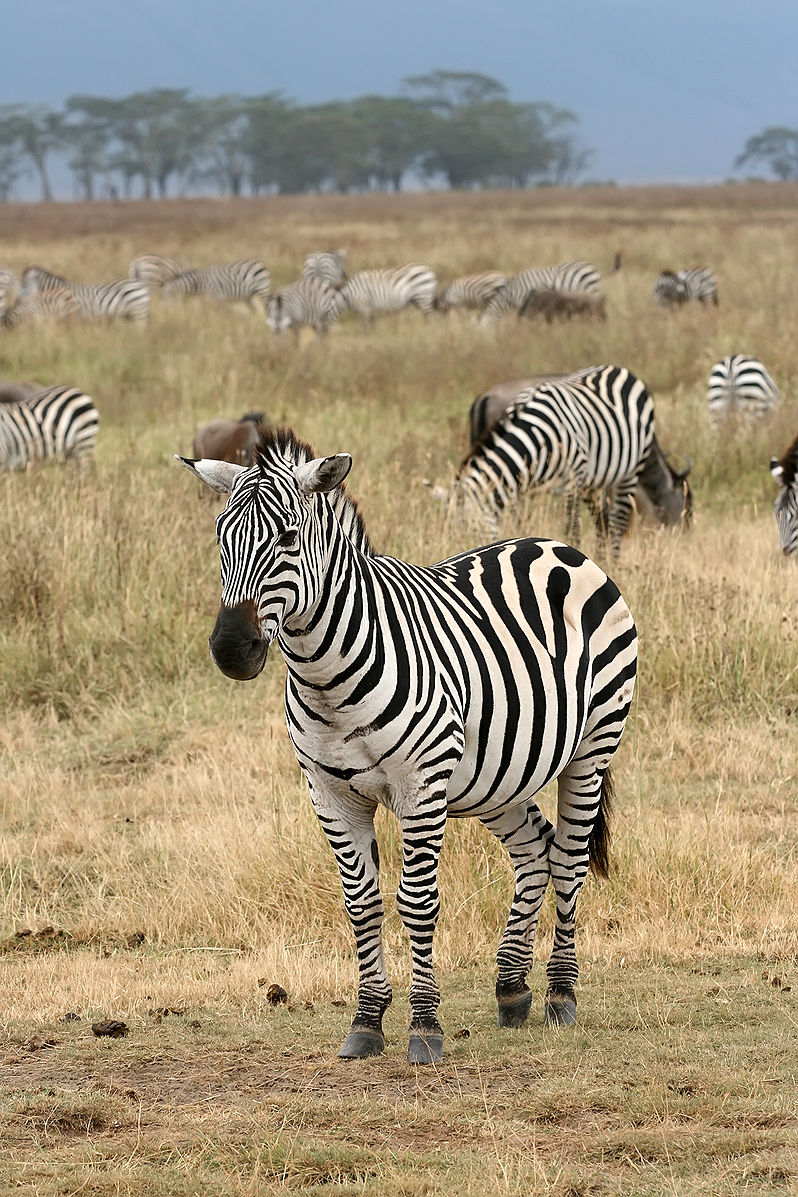
But Zebra didn’t run. He stayed where he was, grazing. He ate and ate and ate.
Then, when he finally arrived to get his horns, there weren’t any left.
There were only long ears, stripes, a mane, and a big mouth.
No horns.
Then all the horned animals laughed at Zebra. “It’s your own fault,” they said, “because you were so greedy for food.”
[an Ila story from Zambia]


Inspired by: "Why Zebra Has no Horns" in The Ila-Speaking Peoples Of Northern Rhodesia, Volume 2 by Edwin Smith and Andrew Murray Dale, 1920.
Notes: You can read the original story online.

2. Why Chimpanzees Don't Have Farms

The chimpanzees wanted to be farmers. They went to town and stole everything they needed — rakes, hoes, shovels — but the baskets loaded with tools were so heavy that the chimpanzees abandoned them by the roadside and never farmed.
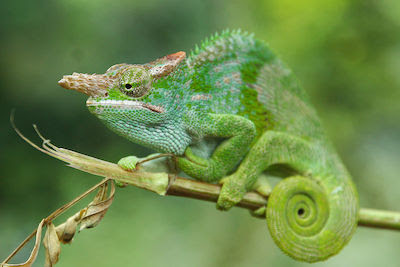
Some chameleons found the baskets and tried to carry them away, but the baskets were too heavy. That is how chameleons got their hunched backs.
Some frogs found the baskets and tried to carry them away but they had no foreheads for the straps, so they put the straps in their mouths. It broke their teeth; that's why frogs have no teeth.
[a Temne story from Sierra Leone]


Inspired by: "Why Chimpanzees Don't Farm" in Anthropological report on Sierra Leone: Stories (Temne) by Northcote Thomas, 1916.
Notes: You can read the original story online. This is really two stories; the first part is about building a house, and the second part is about farming.


3. The Warthog and the Elephant

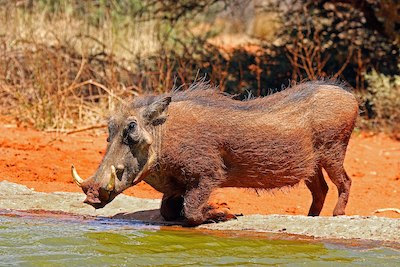
Warthog went with his uncle, Elephant, to drink water.
Warthog drank first. As he was drinking, he stirred up the water. 
Then Elephant drank, and a leech got inside his trunk. "It's a leech!" Elephant screamed. He beat his trunk on the ground and bashed it against a rock; nothing helped. The leech hung on, and blood streamed everywhere. Finally Elephant died.
"Because my uncle's dead, I am now the great one!" Warthog proclaimed. 
He took his uncle's tusks; that is how Warthog got his tusks. 
Over time, Elephants became bigger and Warthogs became smaller, but Warthog still has tusks.
[an Ila story from Zambia]


Inspired by: "Why the Elephant is Distinct from the Wart-Hog" in The Ila-Speaking Peoples Of Northern Rhodesia, Volume 2 by Edwin Smith and Andrew Murray Dale, 1920.
Notes: You can read the original story online. The author provides a detailed account of how a leech can indeed kill an elephant, and thus the elephants' caution when drinking.
4. The Bird who Loved His Wife

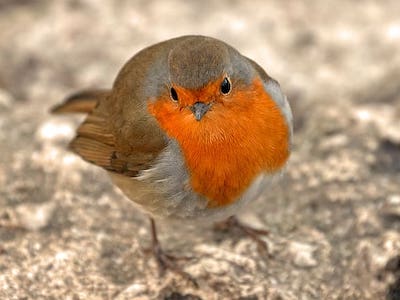
"Dear husband," said the robin, "I am all out of camwood powder!"
"You look beautiful just the way you are," replied her husband, "but I will go buy some for you right away."
The bird flew all the way to the market and there he finally found a cosmetics merchant with camwood powder for sale.
The bird then carried the tiny lump of powder in his throat, but by the time he got back home it had melted all around his throat and chest, and that is why the robin now has a red breast, but his wife does not.
[a Bakongo story from the Congo]


Inspired by: "Why the Congo robin has a red breast" in Congo Life and Jungle Stories by John Weeks, 1921.
Notes: You can read the original story online. The author notes: "Kinsidikiti is a small bird with red round its mouth and red spots on its breast. The female has no red spots on the breast, and the following is the legend accounting for the difference." You can read more about the African forest robin at Wikipedia.

5. The Beaks of the Kestrel and the Hornbill

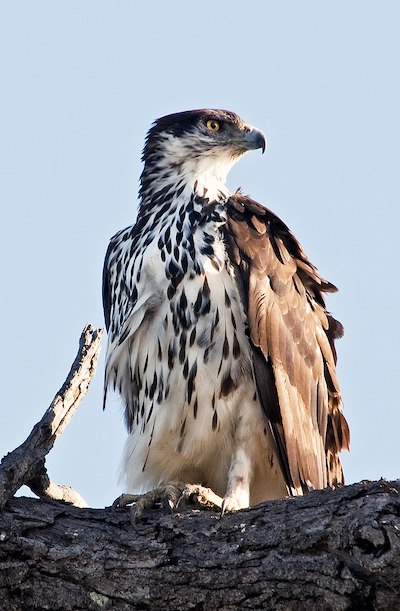
Kestrel used to have a very big beak, while Hornbill had only a small beak. In fact, Hornbill's beak was so tiny that he was embarrassed to be seen in public.
"Kestrel," he said, "loan me your big beak!"
Reluctantly, Kestrel agreed. "Just temporarily," he said. "I want my beak back!"
But Hornbill didn't return the beak. He liked how the other birds now admired him. "Suits me fine!" Hornbill cried. "Suits me fine!"
Meanwhile, Kestrel cried, "Tiny! Tiny! It's too tiny."
You can hear the birds crying those words even now; Hornbill says: Suits-me-fine, and the Kestrel protests: Tiny-tiny-it's-too-tiny.
[an Ila story from Zambia]


Inspired by: "Why Hornbill Has Such a Big Beak and Tom-Tit a Small One" in The Ila-Speaking Peoples Of Northern Rhodesia, Volume 2 by Edwin Smith and Andrew Murray Dale, 1920.
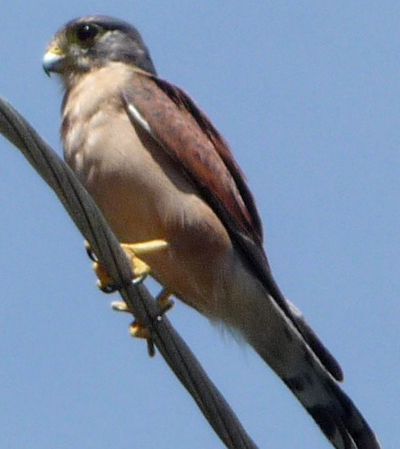
Notes: You can read the original story online. I am not sure if this "katiti" bird is the same one referred to in the story, but that seems to work better than "tomtit" as used in the story for the English name. The katiti is the smallest kestrel: 
6. The War of the Birds and the Snakes

The Snakes and Birds were at war. 
When the Snakes seized the palm-trees, the hungry Birds had no palm-nuts. 
"Whoever brings us palm-nuts to eat," proclaimed the Bird-King, "shall receive a beautiful cloak of white feathers."
Crow went to a palm-tree and alighted between two Snakes. He looked left, saying, "I'm glad to see you, Brother!" Then he looked right. "I wish you well, Brother!"
Surprised, the Snakes gave him palm-nuts.
Crow did this again and again until he filled his sack.
The grateful Bird-King obtained white feathers from all the birds, and Crow wears his white cloak even now.
[a story from Liberia]


Inspired by: "Crow's Coat of Feathers" in Folktales from Liberia (Journal of American Folklore) by Richard C. Bundy, 1919.
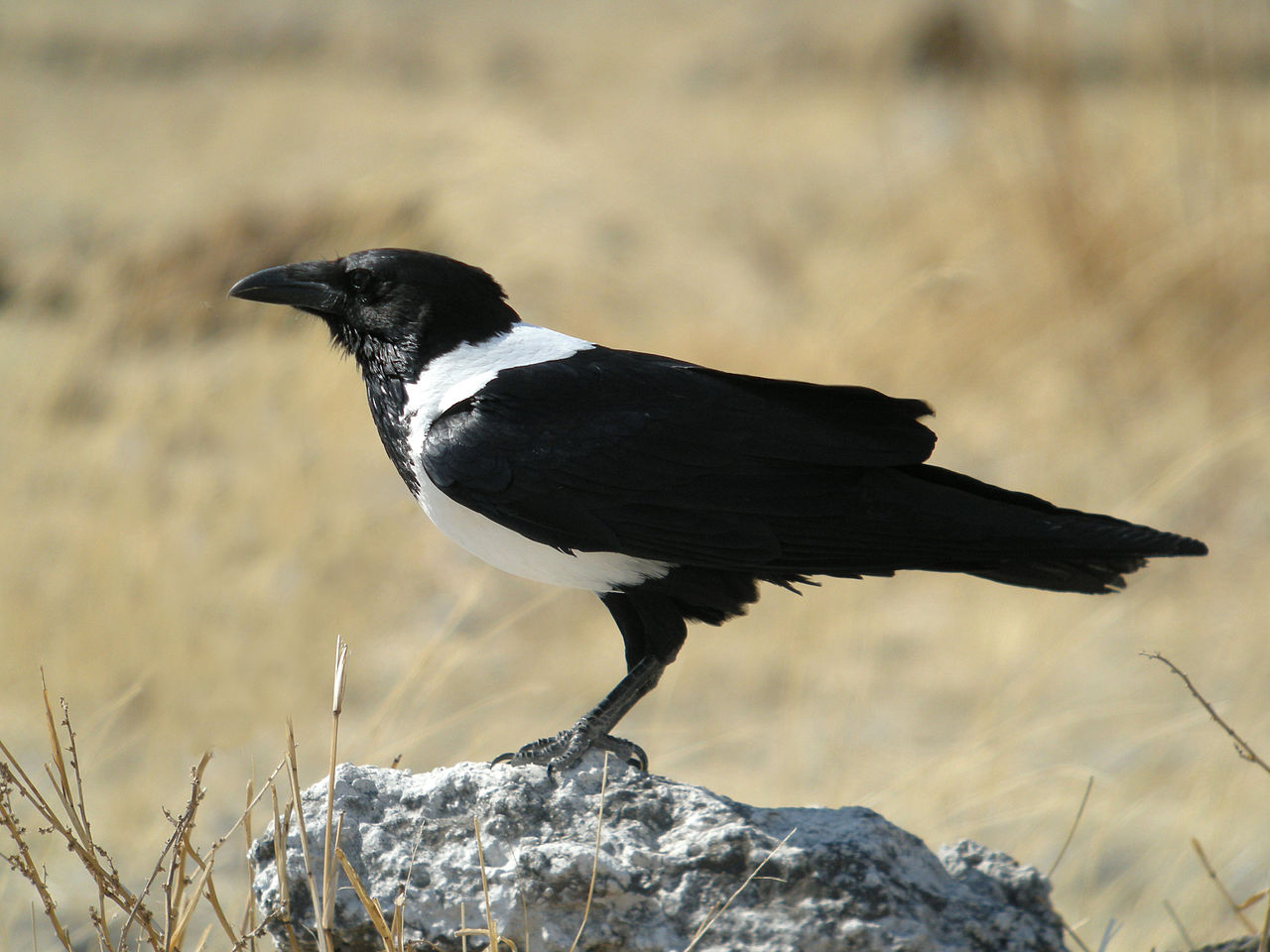
Notes: You can read the original story online. In the original story, the Crow learns wisdom from his mother. The African pied crow (found in Liberia and throughout the continent) has white feathers around its neck.


7. The Mother of the Snakes

After Mother-Snake gave birth to all the Snakes, she told them, "Listen for when I call you to come get your poison."
Later, Mother-Snake called her children and gave them their poisons. Puff-Adder came, and Bush-Viper; Spitting-Cobra came, and so did Black-Mamba and Green-Mamba.
Water-Snake, however, had gone fishing. He didn't come when his mother called.
"Where's my poison?" Water-Snake asked when he finally returned home.
"I called, but you didn't come," Mother-Snake said. "Because you were disobedient, you have lost your poison. Now the people will just laugh when you bite them because your bite can do no harm."
[a Loki story from the Congo]


Inspired by: " Why the Water-Snake Has no Poison" in Among Congo Cannibals by John Weeks, 1913.
Notes: You can read the original story online. The original story refers to the mother as a "python," which is not venomous, so I just said "Mother-Snake" instead. There are many types of poisonous snake sin the Congo, and it's a serious medical problem today. The African brown water-snake is non-poisonous:


8. The Witch and the Crab

"No food for you," the witch told her granddaughter, "unless you guess my name."
So the little granddaughter went hungry.
Crab pitied the girl, and when she came to fetch water, he whispered, "Her name is Sarjmoti-Amoa-Oplem-Dadja."
The girl thanked him and ran home, but forgot the name. She went back and begged Crab to repeat it. Reluctantly he whispered again, "Sarjmoti-Amoa-Oplem-Dadja."
The girl ran home and shouted, "Sarjmoti-Amoa-Oplem-Dadja, feed me!"
The witch realized Crab must have betrayed her. Crab ran, but not fast enough. She threw her calabash at him, and it stuck! 
That's how Crab got his shell.
[a Gurunsi story from Burkina Faso]


Inspired by: The Orphan Girl and other stories: West African folk tales by Buchi Offodile.
Notes: This is a story from the Gurunsi people of Burkina Faso: "How the Crab Got its Shell." You can read the original story at the Internet Archive. The full version of the story is full of wonderful details! Compare a similar story about Anansi from the West Indies: Anansi and the Witch's Name.


9. The Creation of Night

Long ago it was always day; there was no night.
Then God called the people and the animals together. "I'm going to create night now," God said. "It will be a time for sleeping."
"Thank you, God!" the people and the animals said.
"You must cover your faces with your hands and paws while I do this," God explained, and everyone obeyed — except for Lion, Leopard, and Hyena.
Those three animals peeked while God created night.
That is why Lion, Leopard, and Hyena can see in the dark.
They hunt at night, while everyone else is sleeping as God intended.
[an Oromo story from Kenya]


Inspired by: "Why Lions, Leopards, and Hyenas Hunt at Night" in Two Galla Legends (published in Man) by Alice Werner, 1913.
Notes: You can read the original story online. This story comes from the chief of the Barareta Oromo (Galla) at Kurawa, north of Malindi in Kenya. You can read more about the Oromo people at Wikipedia.


10. The Medicine of Immortality

After God created people, he saw that the people grew old and died, so he filled a jar with medicine and gave the jar to a crow, saying, "Take this to the people so that they will live forever."
The crow flew down from heaven, but an eagle overtook him and stole the jar. Because the eagle flew so swiftly, he spilled medicine all over the forest.
When he reached the people, only a little medicine remained.
That is why people recover from some sicknesses, but eventually they die. Meanwhile, the forest lives on and on, renewing its life everlasting.
[a story from Liberia]


Inspired by: "Plant Life and Animal Life" in Missionary Story Sketches: Folklore from Africa by Alexander Priestley Camphor, 1909.
Notes: You can read the original story online. The species of the original messenger bird is not stated in the story; I made it a crow. In the original story, a young boy asks an old man why saplings made into a fence continue to sprout, and in reply the old man tells this story. For more about Camphor and his work in Liberia, see the note to this story: The Elephant and "Big America." 

11. The Bees and the Honeyguide Bird

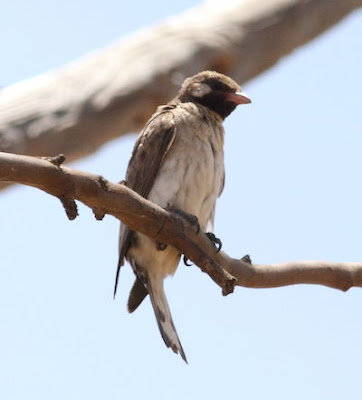
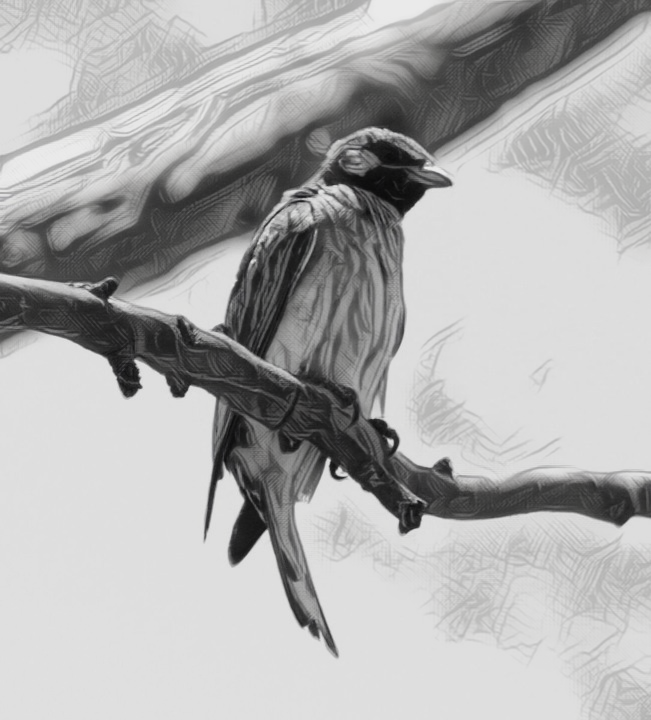
There was a Bird who had a son, but Bees killed him.
The mother vowed revenge on the Bees. She couldn't attack the Bees herself; she needed help. So, she followed the Bees to see where they lived, and then she found a human being. She flew around and around the person, singing and fluttering. She kept singing and fluttering until the person followed her to the Bees.
Seeing the Bees, the person built a fire, drove the Bees away with the smoke, and took their honey.
That is what the Honeyguide Bird does even now, forever avenging her son.
[a Tigray story from northern Ethiopia]


Inspired by: "Of the Bird Qerqer and her Son Hamed" in Tales, Customs, Names, and Dirges of the Tigre Tribes by Enno Littmann, 1915.
Notes: You can read the original story online. The story also mentions that the honeyguide is not always reliable (a motif that shows up in other stories): "But sometimes she cheats and leads to beasts of prey or to serpents." You can read more about the honeyguide bird at Wikipedia.


12. The Bird Who Married a Bee

There was once a Bird who went looking for a wife in Bee-town. "I want to get married!' he said.
The Bees agreed, so the Bird married a Bee.
Later, however, the Bees came and stole the Bee-wife away from the Bird.
"Since you stole my wife," shouted the Bird, "I'll help the humans steal your honey."
That is the origin of the Honeyguide Bird who now leads humans to where the Bees have hidden their hives. Then the Honeyguide Bird watches the humans break open the hives to steal the honey. 
"That is my revenge!" he chirps. "Revenge! Revenge!"
[an Ila story from Zambia]


Inspired by: "Why Honey-Guide Betrays the Bees to People" in The Ila-Speaking Peoples Of Northern Rhodesia, Volume 2 by Edwin Smith and Andrew Murray Dale, 1920. 
Notes: You can read the original story online. See the note for an interesting account of the legend about how the Honeyguide sometimes deceives people, leading them into danger instead of to the hive. This story also appears in a version from Angola here: Honey Guide.


13. The Honeybadger and the Honeycomb

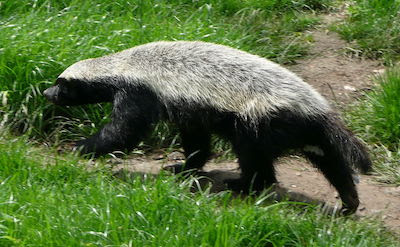
Honeybadger follows bees and steals their honey, carrying away pieces of honeycomb. He then hides the honeycomb and goes back for more, building a pile of honeycombs in his hiding place.
When boys who herd cattle see Honeybadger carrying pieces of honeycomb, they follow him to discover his hiding place. Then, as Honeybadger brings back more honeycomb to add to his pile, the boys steal pieces of honeycomb for themselves.
Honeybadger is suspicious: why does the pile get smaller, not larger?
Hence the proverb for when things are not going as they should: Honeybadger is suspicious when the honeycomb disappears.
[a Tswana story from southern Africa]


Inspired by: "The Ratel Is Suspicious About the Honeycomb" in Sechuana Reader by Daniel Jones and S. T. Plaatje, 1915.
Notes: You can read the original story online, where the name "ratel" is used for the honey-badger.


14. The Jackals and the Honeybadger's Beer

Jackal and Honeybadger used to live in the same village, and Jackal married Honeybadger's daughter.
One day, Honeybadger brewed some honey-beer and invited his son-in-law to come drink. Jackal came with all his wives and all his children, and they drank. They drank all day, they drank all night, and they were still drinking the next morning.
By noon the next day, they were all very drunk. 
Jackal staggered off in one direction, one wife in a different direction, another wife in another direction, the children likewise, and that is why to this day jackals do not live in packs.
[an Ila story from Zambia]


Inspired by: "Why Jackals Do not Got in Herds" in The Ila-Speaking Peoples Of Northern Rhodesia, Volume 2 by Edwin Smith and Andrew Murray Dale, 1920.
Notes: You can read the original story online. The story says "weasel" (and there is indeed a small striped weasel found in Zimbabwe), but it seems more likely that this would be the ratel, or honey-badger in English.


15. The Frog and the Elephant

Elephant challenged Frog to a wrestling match.
"I accept your challenge under one condition," said Frog. "We must run and jump into the wrestling ring."
"I agree!" said Elephant, confident in his strength.
All the animals came to watch the match.
Then Frog and Elephant ran and jumped into the ring. Frog jumped easily, but Elephant isn't a good jumper; he stumbled and fell. When Elephant hit the ground, Frog pinned him down and declared victory.
To celebrate his victory, Frog's whole family started croaking loudly, and that is why frogs croak today: they are celebrating Frog's victory over Elephant.
[a story from Liberia]


Inspired by: "Why Frogs Croak" in Folktales from Liberia (in Journal of American Folklore) by Richard C. Bundy, 1919.

16. The Lion and the Monkey

"Help!" yelled Lion, trapped in a pit.
Monkey walked by.
"Rescue me, and I'll make you rich, Monkey!"
Monkey helped Lion out and said, "Now make me rich."
"I've got to eat first," roared Lion. "Give me something to eat!"
"I don't have any food to give you."
"Give me some of your tail!" said Lion. "It's long; there's plenty to spare."
"But..."
Lion grabbed Monkey's tail. "Or I could just kill you!" he snarled.
"Curse you, Lion!" said Monkey. "You'll never catch another monkey."
Then Lion killed and ate Monkey; since then, monkeys live in trees, safe from lions.
[a Vai story from Liberia]


Inspired by: "The Lion, The Fox, and the Monkey" in Negro Culture In West Africa by George Ellis, 1914.
Notes: You can read the original story online. These are Vai stories from Liberia. The original story also includes the fox as a counterpoint to the monkey, but I could not squeeze that in: "The Lion told the Fox, “If you take me out of this hole, I will make you rich.” The Fox replied that his family had sworn not to go into any hole, and then he went on."

17. The Hen and the Hawk's Chick

A hawk gave birth to a son, and the hen was her midwife. When the hawk was recovered enough to go forage for food, she said to the hen, "Take care of my son! I'll be back soon."
But when the hawk did not come back, the hen grew impatient and killed the young hawk.
When the hawk came home and found her young one dead, she was furious. "I curse all chickens!" she shouted. "From this day forward, anyone who is my offspring will kill the young ones of the hen because this hen has killed my young one."
[a story from Madagascar]


Inspired by: "The Hawk and the Hen" in Oratory, Songs, Legends, and Folktales of the Malagasy (published in Folklore) by James Sibree, Jr., 1883.
Notes: You can read the original story online. The hawk and the hen fight in the original story, and it says they were "equal in strength" but does not explain more about that, so I left it out.

18. The Hawk who Imitated the Hen

Returning from market, Hen saw Hawk coming towards her. She tucked her leg under her wing and then said, "Hello, Hawk!"
"Hello!" he replied. "What did you buy at the market?"
"I bought meat," Hen answered.
"Was it expensive?" Hawk asked.
"I paid with my leg," said Hen. "You'll be able to buy a lot of meat with your big leg. Shall I cut it off for you?"
"Yes, please!" said Hawk.
Hen cut off Hawk's leg, and he couldn't walk anymore. 
"I'll kill you for this!" Hawk shouted.
Ever since, hawks chase chickens, and chickens still tuck their legs.
[an Ankole story from Uganda]


Inspired by: "The Hawk and the Hen" in The Banyankole by John Roscoe, 1923.
Notes: You can read the original story online. The Ankole people live in Uganda.


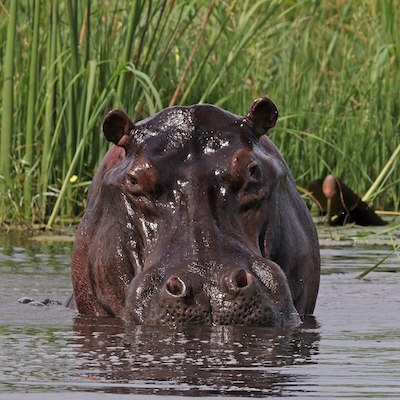
19. The Hippo who Imitated the Hen

Hen tucked one leg beneath her wing and squawked, "I sold my leg at the market for a sack of gold."
Hippo thought to himself, "My leg is far bigger, so it will be worth even more."
Then he told his friends Hawk and Kite, "Let's go to the market together."
But when Hippo cut off his leg to sell, he bled to death.
Hawk and Kite then flew back to the village. "With your trickery, you killed our friend Hippo!" they shouted at Hen, and to this day hawks and kites are enemies of the hen and her family.
[a Loki story from the Congo]


Inspired by: "The Fowl and the Hippopotamus" in Among Congo Cannibals by John Weeks, 1913.
Notes: You can read the original story online. In the original, the fowl sold its leg for "two thousand brass rods" as a form of currency; you can see a bundle of brass rods here. The original story adds at the end a bit about crocodiles and humans: "Fowls called on the Crocodiles to bite the Hippopotami and wound them to death; and they asked Man whenever he saw a Hippopotamus to hurl his spear at it and kill it. Thus, through the Fowl's one deception, enmity, quarrels, and death were first introduced among the birds and animals."

20. The Elephant and the Child

Long ago elephants lived with people in the village, and the people's children took the elephants out to graze.
Then one day an elephant killed a child. The other children ran home, shouting, "Mother! Father! An elephant killed one of us."
The children's father took his bow and arrow and shot the elephant, and the elephant died.
The other elephants said, "We did wrong, and now the people will kill us." 
So the elephants all ran away.
When the people saw an elephant, they said, "You killed our child," and they shot the elephant.
Elephants and people are still enemies.
[a Yao story from Malawi]


Inspired by: "Elephants" in Africana by Duff Macdonald, 1882.
Notes: You can read the original story online. This is a legend of the Yao people of Malawi.