Showing posts with label DPL. Show all posts

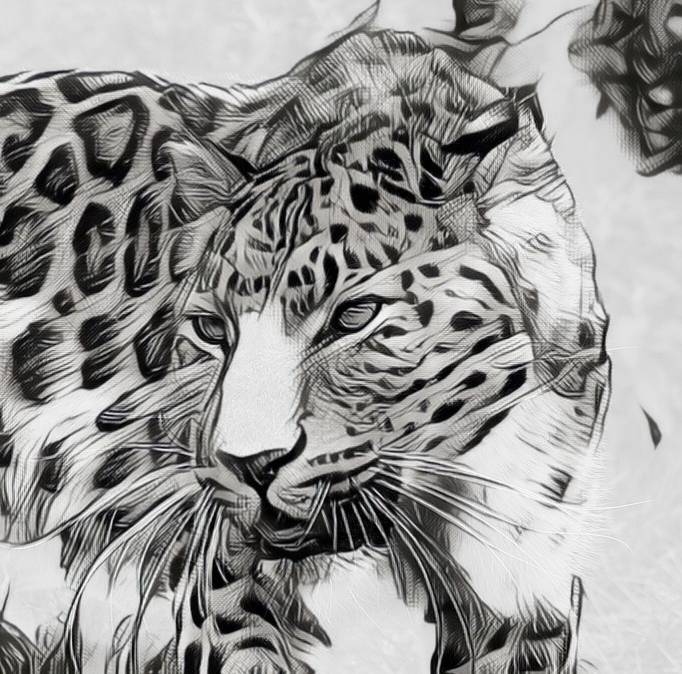
31. The Leopard and the Man

In olden times, leopards grabbed people by the arm, which meant the people sometimes escaped.
“The leopard was so foolish!” one man boasted. “If he had grabbed me by the throat, I’d never have broken free. But the stupid creature grabbed me by the arm, so I broke free and got away.”
A leopard in the bush heard the man’s words. “The biggest fool of all,” he said to himself, laughing, “is the one who teaches his enemies how to kill him.”
Ever since, leopards catch people by the throat and nobody escapes, all because of the man who boasted.

[a Banyoro story from Uganda] 


Inspired by: "The Leopard" in The Uganda Protectorate, volume 2 by Harry Johnston, 1904.
Notes: You can read the original story online. This is a Bantu story from Uganda.



71. The Monkey and the Leopard

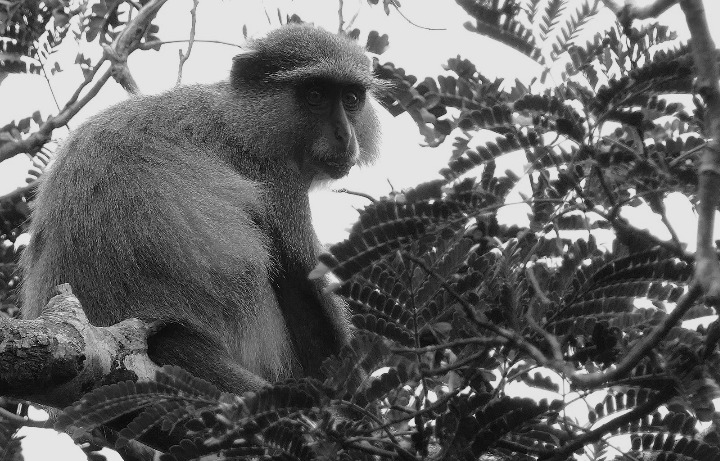
Monkey and Leopard used to be friends and shared their food. But one day Monkey caught some fish and ate it all; he didn’t share with his friend.
Leopard saw the fish bones. “Where’s my share?” he demanded.
“Forgive me,” Monkey said. “I ate all the fish myself.”
Leopard was furious. “Then I will eat you!” he snarled, grabbing Monkey in his paws.
“Don’t forget to say grace before you eat me,” Monkey reminded him, and when Leopard folded his paws to give thanks to God, Monkey escaped up into the trees.
Monkeys have lived in the trees ever since.

[a Calabar story from southern Nigeria] 


Inspired by: "Monkey and Leopard" in Calabar Stories (published in Journal of the Royal African Society) by J. Maxwell, 1906.
Notes: You can read the original story online.


77. The Pious Cat and the Mouse

There was once a cat who pretended to be very pious, as if he were a great saint.
A mouse approached this holy cat, seeking wisdom. “Enlighten me, O Cat!” squeaked the mouse.
“Come closer,” said the cat. “I’m hard of hearing. Come closer!”
“He is devoted to God,” the mouse thought to himself. “Surely I have nothing to fear.” So the mouse got close enough to shout into the cat’s ear, whereupon the cat grabbed him.
“O Holy One!” shrieked the mouse. “What happened to your devotion?”
“It comes and goes,” said the cat as he swallowed the mouse.

[a Swahili story] 


Inspired by: "The Cat That Was a Devotee" in Swahili Stories from Arab Sources, author unknown, 1881.
Notes: You can read the original story online


"Welcome to my mosque!"
photo by Jussi Mononen

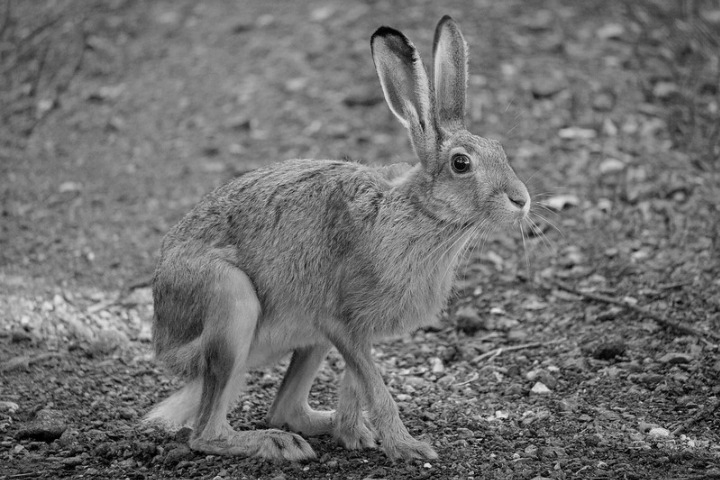
120. The Rabbit and the Earth

Rabbit said to Earth, “You’re so lazy! You never move.”
Earth just laughed. “You don’t know what you’re talking about, Rabbit! I’m always moving, and I move faster than you do.”
“You’re wrong!” Rabbit retorted. “And I’ll prove it. Let’s race!”
Then Rabbit started running. He ran and ran, as fast as he could, and then he stopped, sure he had won.
But to Rabbit’s surprise, there was Earth, right there under his feet. Earth had gotten there first.
“I’ll show you!” Rabbit shouted, and then he ran and ran and ran some more.
Rabbit kept running until he died.

[a Luo story from eastern Africa] 


Inspired by: "The Earth and the Hare" in Ten Years in Equatoria by Gaetano Casati, 1891.
Notes: You can read the original story online, and you can read about Casati at Wikipedia. This is a story of the Luo (Lur) people.

147. The Francolin and the Tortoise

“I am so much better than you!” boasted Francolin. “I walk fast, but you are slow. And I can fly!”
“Congratulations to you,” said Tortoise. “I just do the best I can.”
Then they smelled smoke.
“The grass is burning!” shouted Tortoise.
“We must get to safety!” squawked Francolin.
Tortoise found a deep hole made by an elephant’s foot that was full of water. He plunged into the hole and survived the fire.
Francolin tried to fly away but the smoke and flames overcame him, and he fell to the ground and died.
He who boasts is not always best.

[a Banyoro story from Uganda] 


Inspired by: "The Francolin and the Tortoise" in Ten Years in Equatoria by Gaetano Casati, 1891.
Notes: You can read the original story online, and you can read about Casati at Wikipedia. This is a story of the Nyoro people of Uganda. Compare the story of the tortoise and the partridge as told in Angola.


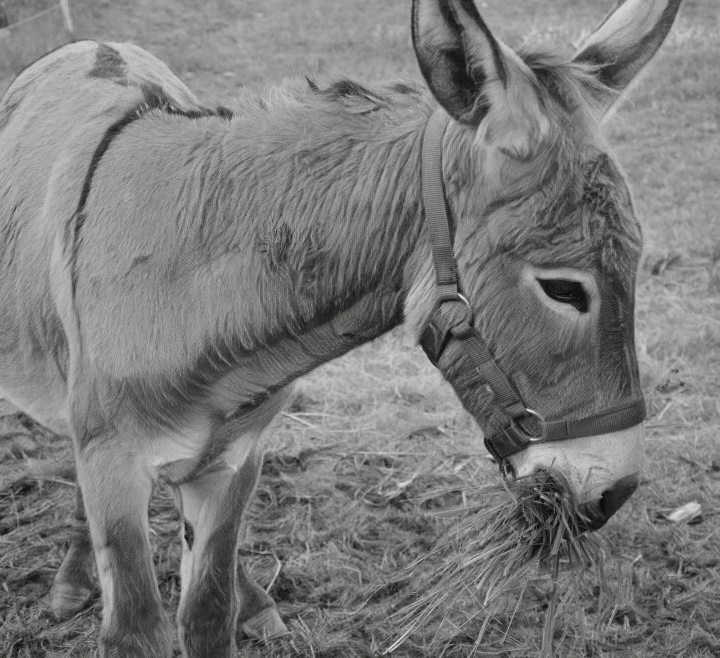
200. The Danger of a Nonexistent Donkey

A boy found a few coins in the street. “We can buy chickens!” he said.
“Yes!” said his father. “The chickens will lay eggs, and we’ll sell the eggs to buy goats.”
“Yes!” said the son. “The goats will breed, and we’ll sell the kids to buy a donkey, and you’ll give me the donkey to ride.”
“No!” shouted the father. “The donkey is mine!”
“No!” shouted the son. “The donkey is mine!”
“Mine!” shouted the father.
“Mine!” shouted the son.
And then the father hit his son and blinded him in one eye.
All because of a nonexistent donkey.

[a Swahili story]


Inspired by: "The Story of the Man and His Son" in Swahili Stories from Arab Sources by an unknown author, 1881.
Notes: You can read the original story online. Compare the popular folktales about "Air Castles" collected by Dan Ashliman.


Tiny Tales from DPL 2021

Welcome to Tiny Tales from the Digital Pedagogy Lab 2021. This is a collection of stories from participants in DPL 2021. Each story is just 100 words long, or less.
Web PDF - EPUB - Kindle - Print


Creative Commons. This work is released with a Creative Commons license: CC BY-NC-SA 4.0. That means you can remix and reuse individual stories or the contents of the whole book with attribution for non-commercial purposes, provided that you release your work with the same license. Authors hold the individual copyrights to their stories. Find out more.
Attribution: Tiny Tales from the Digital Pedagogy Lab 2021
Version: August 31 2021


You can access the book in a variety of formats as shown above.

Pressbooks. This is a web-based presentation of the book.

PDF. You can download a PDF copy of the book.

EPUB. You can use this EPUB file for ebook readers like Nook, etc.

Kindle. The Kindle is available at Amazon for 99 cents (which is the lowest price you can set for a Kindle book).

Print. There is a paperback version available at Amazon for $4.99, with free Prime shipping (although it's print-on-demand, so expect about 10 days total).


With many thanks to all the contributors!


Pig Outwits Wolf: A Catawba Tale

"Come to my house for apples!" Wolf told Pig.
But when Pig came, Wolf had eaten the apples.
"Come to my house for apples!" Pig told Wolf.
But when Wolf came, there were no apples. "I'll eat you instead!" Wolf snarled. "Boil the water for cooking!"
Pig put water in the pot; soon the water was boiling.
"Wait!" Pig said. "What's that? I hear hunters; I hear their dogs!"
Wolf was scared. "Hide me!" he shouted. 
"Hide in the pot," Pig said, taking the lid off the pot.
Wolf jumped in.
Then Pig put the lid on, and Wolf died.


This is a story told by Susan Harris in the appendix to Catawba Texts.


Bear and Rabbit: A Catawba Tale

Bear invited Rabbit to his house for dinner. "I will cook good food for you!" Bear said.
Rabbit came, and he watched Bear prepare the food. He saw Bear take a sharp awl, and then Bear hit his foot with the awl. Grease came pouring out, and Bear used that grease to make the food.
Then Rabbit invited Bear to his house for dinner. "I know how to cook good food too!" Rabbit said.
When Bear came, Rabbit took a sharp awl and he hit his foot. No grease came out, and Rabbit hurt himself so badly that he died.


This is one of the stories told by Susan Harris in the appendix to Catawba Texts. Here is how the story starts:


Opossum Captured: A Catawba Tale

The animals were angry at Opossum. They were tired of Opossum boasting. They were tired of Opossum playing tricks on them. So, the animals got together and caught Opossum.
Then they debated what to do with him.
"Burn him in the fire!" some of the animals shouted.
Opossum just laughed.
"Let's drown him in the water!" others shouted.
Opossum kept laughing.
"We should shove him into the brambles!" they all shouted.
"Oh no!" shrieked Opossum. "Don't do that!"
So they shoved Opossum into the brambles, and he scurried away. "This is my town!" Opossum sang. "This was always my town!"


This is part of Sally Gordon's long story about Opossum, and it is one of the "Brer Rabbit" stories that circulated among Native American storytellers. For the back-and-forth between Native American storytellers and African American storytellers, see  When Brer Rabbit Meets Coyote: African-Native American Literature by Jonathan Brennan; available at Internet Archive.


Wolf and Opossum: A Catawba Tale

Wolf is always chasing Opossum, and Opossum is always trying to escape.
One time Wolf was chasing Opossum. "I'm going to get you!" he shouted.
Opossum ran as fast as he could up a tall tree that stood next to a pond.
"Where did you go?" snarled Wolf circling the tree.
"I'm right here in the water!" said Opossum. "Look down and you'll see me."
Wolf looked down. He saw Opossum in the water, but when he lunged and grabbed with his teeth, all he got was a mouthful of dirty leaves.
Up in the tree, Opossum laughed and laughed.


This is part of Sally Gordon's long story about Opossum. See also her story about the woman and the deer which also mentions this incident.

Opossum and the Persimmons: A Catawba Tale

Opossum found a persimmon-tree. "All these persimmons are for me," he squealed climbing the tree.
Deer came. "I want persimmons!" Deer shouted.
"They're not quite ripe," Opossum replied. "You must butt the tree to make them fall."
Deer butted the tree.
"Harder!" yelled Opossum.
Deer butted the tree so hard he killed himself.
Next, Opossum planted a sharp stick in the ground and then went back up the tree.
Wolf came. "I want persimmons!" Wolf shouted.
"Here's a low-hanging branch," Opossum replied. "Jump up!"
Wolf jumped and fell on the stick. He died.
Opossum ate all the persimmons by himself!


This story from Sally Gordon blends lots of different bits of trickster-opossum lore into one long story. You can see the whole story in Catawba Texts


See also an even longer version by Susan Harris in an appendix to the book: Opossum Outwits Deer and Wolf.


Going for the Doctor: A Catawba Tale

A person was sick. 
"Go get Doctor Toad," the people said to Bullfrog and Turtle; Toad was a medicine-man.
Bullfrog hopped fast and he returned with Doctor Toad before Turtle was even halfway there.
Next time a person was sick, they sent Snail. Snail was so slow he didn't even get beyond the doorstep. Snail was ashamed; that's why he stays in his shell.
Next time, they sent Bullfrog and Turtle, but Bullfrog was lazy. He didn't go.
Turtle came back with Doctor Toad, and Bullfrog was so ashamed he jumped into the pond: ker-plunk! That's where he lives now.


This story comes from Sam Brown, son of Margaret Brown, as reported in Catawba Texts. The story doesn't explain how terrapin managed to beat bullfrog, so I said that bullfrog was being lazy. Compare also the story told by Susan Harris about rabbit and snail going for the doctor.

Rabbit Steals Fire: A Catawba Tale

The Buzzards kept the fire for themselves; they wouldn't share. The animals were all cold. The people were all cold.
Rabbit came to the Buzzards sitting around the fire. 
"I'm so cold!" Rabbit said. "Let me come near the fire."
"No!" squawked the Buzzards.
"Please," Rabbit begged; "just let me warm my feet."
One Buzzard felt sorry for Rabbit and let him put his feet near the fire. 
Rabbit was ready: he had put twigs between his toes; the twigs caught fire! 
Then Rabbit RAN. 
Fire spread everywhere.
Now the people have fire and can stay warm, thanks to Rabbit.


This is a story told by Margaret Brown; you can see the complete story here: Catawba Texts.


Sally Gordon, Margaret Brown's daughter, also told this story in a shorter form; see version b.


Opossum: A Catawba Tale

Opossum was very proud of his tail. "I alone have a big bushy tail!" he said. "Squirrel's tail is nice, but mine is bigger! Mine is bushier!"
Then Opossum went to sleep inside his hole.
He left his tail sticking outside.
Snail ate all the hair on his tail!
When Opossum came out, he turned around to admire his tail... but his tail hair was all gone.
Opossum was so ashamed he hid for a year inside his hole. Even now when he comes out, he hangs his head in shame.
That is how Opossum got the name Depetustre: Ancient-One-No-Tail.


This is a story told by Margaret Brown as recorded in Catawba Texts:


The Kidnapped Child: A Catawba Tale

A bad woman stole another woman's child.
The mother searched until she found her child; he hid her in a hollow log. "Wait here," he said.
Then he killed a deer but sliced the tie-string; when the bad woman lifted the deer, the strap broke. 
Then she saw smoke: they had set her house on fire! 
The boy and his mother rose up, up, up.
The bad woman grabbed hold to rise up, but she fell down; she is Ugni the comet. 
Mother and son live in the sky now; she is the sun and her son is the cloud.


This is a Catawba tale told by Sally Gordon; you can see the whole Catawba version in Catawba Tales; it is one of the longest stories in the collection:


I left out the part where a woodpecker helps the mother to find her son, but see another version of the woodpecker story here: The Woodpecker. There are lots of other details I did not include here, but you can see the full story online. For additional commentary, see p. 22 of Being Catawba: The World of Sally New Rvier, 1746-1840 by Brooke Michele Bauer; dissertation online.


The Dog and His People: A Catawba Tale

The Tuscarora came and killed the people, all the people. Their dog hid in the creek bottom, weeping for the people. 
Then he found a survivor, a little boy. He brought cornbread to the boy. The dog raised the boy, living on the mountainside. 
Later the dog came to a house. He cried and cried. 
"Why are you crying?" the people asked.
"The Tuscarora killed my people," said the dog. 
"How do you know?" they asked.
"I know, I saw," said the dog. "Go the mountainside and you'll find him."
So the people went and they brought the boy home.


This is another story told by Margaret Brown in Catawba Texts; click here for more Catawba stories. You can find out more about the Tuscarora people at Wikipedia. Here is how the story begins; you can find the complete Catawba text here.


The Little People: A Catawba Tale

The Little People live in the woods, underground. You can hear them; they cry like children.
They eat acorns and mushrooms, tadpoles and mud-turtles.
Sometimes they steal children.
They'll tie you by your hair to a tree; they make braids in horse's tails.
Long ago they stole my brother and put him on a tree-stump in the pond. They sucked the blood out of his arm. They taught him medicine, but he nearly died.
Me? I rub tobacco juice on my head. "Leave me be," I say to them. "I am alone here, I am old." They don't bother me.


This is another story told by Margaret Brown in Catawba Texts; she uses the word yehasuri for these little people; click here for more Catawba stories


You can find out more about "little people" traditions among different Native American traditions in this book by John Bierhorst, available for check-out at Internet Archive: The Deetkatoo: Native American Stories about Little People.


The Women Who Hid: A Catawba Tale

This happened a long time ago.
Bad men were coming who wanted to kill the women.
But the women had the power to change themselves.
One woman changed herself into a blacksnake.
Another woman changed herself into a lizard.
Another woman changed herself into a cricket.
The bad men came. "Where are the women?" they shouted. "Where did the women go?"
But the women were hiding. The men could not find them.
Blacksnake. Lizard. Cricket.
"Where are the women?" the men kept shouting, and then they went away.
The next day, the women became themselves again. 
The women came home.


This is another one of the stories in Catawba Texts told by Margaret Brown. Here is the story as recorded in the book, and a link to more Catawba stories here.


The Witch: A Catawba Tale

There were two old women, sisters.
One of the two sisters was a witch. "I'm going now, sister!" she would say, and then the witch would turn herself into a hoot owl and fly up the chimney out into the night, perching in a tree near their house.
Inside, her sister could hear the owl hooting in the darkness, and she hooted back, making the sound of a hoot owl: hi-khi-kh-hoo-hoo hi-khi-kh-hoo-hoo.
The witch became an owl to steal chickens. 
That was how the sisters lived: the witch hunted in the night and brought home chickens for them to eat.


I never would have noticed, but the photographer points out that the owl has just fed; you can see a tiny drop of blood on the beak:


This is another one of the stories told by Mrs. Margaret Brown, a Catawba woman who was born around 1835; she died in 1922. I really appreciate the emphasis on the sisters supporting each other, and the practicality of what the witch did: she became an owl so that they could have food to eat.

You can see the other stories I've retold by Mrs. Brown and by her daughter Sally Gordon whose tales are transcribed and translated in Frank Speck's Catawba Texts. Here is the text of this story:


This is a recording of the call of a female hoot owl; in my story I added in the hoo-hoo part in addition to the screech sound used by the storyteller: