Showing posts with label Chain Tales. Show all posts

196. The Father and His Son

"Let's play hide-and-seek!" said a son to his father. 
"Go hide," said the father. "I'll find you later."
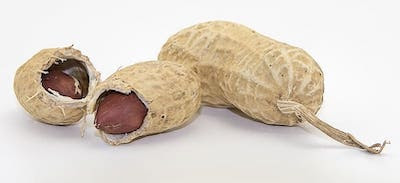
The son hid in a peanut-shell. 
A chicken swallowed the peanut; a wildcat swallowed the chicken; a snake swallowed the wildcat.
Then the snake slithered into the river and was caught in a fish-trap.
The father couldn't find his son, so he went to check his fish-trap. He found the python, cut it open, found the wildcat, cut it open, found the chicken, cut it open, found the peanut... and inside the peanut was his son!
"Found you!" said the father, smiling.
[a Bakongo story from the Congo]


Inspired by: "The son who tried to outwit his father" in Congo Life and Jungle Stories by John Weeks, 1921.
Notes: You can read the original story online. The story also had a dog in it who swallowed the bush-cat, but I left the dog link in the chain out.


104. The Spider’s Funeral

Spider was hungry, so he started a rumor: “Spider is dead!”
Then he lay down, axe nearby, waiting.
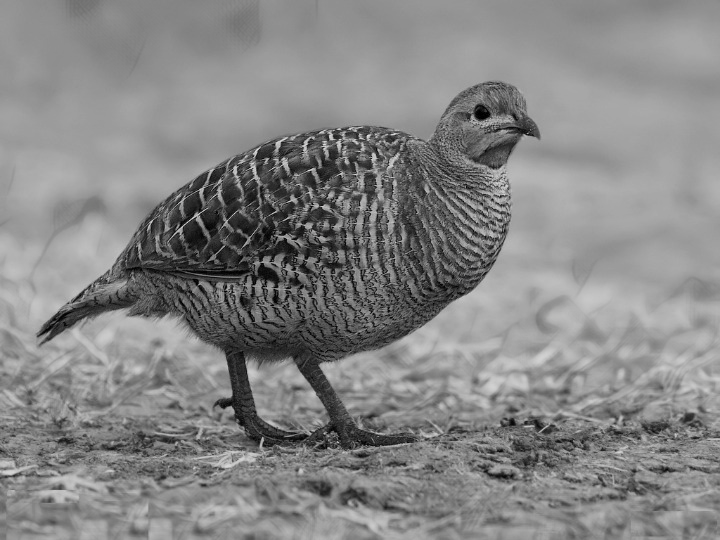
Elephant told Buffalo who told Hartebeest who told Gazelle who told Duiker who told Rabbit who told Jerboa who told Francolin.
They came and wept over Spider’s body. “Alas, Spider is dead!”
But Francolin saw Spider’s eyeball sparkling. “Run!” she shouted.
Then she saw the axe. “Run now!”
Francolin flew up, but when Elephant ran, he trampled Buffalo who trampled Hartebeest who trampled Gazelle who trampled Duiker who trampled Rabbit who trampled Jerboa.
Spider killed and ate them all.
Only Francolin escaped.

[a Hausa story from northern Nigeria] 


Inspired by: "The Spider Has a Feast" in Fifty Hausa Folktales (published in Folklore) by A. J. N. Tremearne, 1910.
Notes: You can read the original story online. The list of animals in the original is even longer, and I really like how this has the quality of a chain tale with the rumor spreading through the animals large to small.


194. The Goat-Dung

Please throw some goat-dung my way!
Why goat-dung? To hurl at the sky.
Why the sky? To get a little water.
Why a little water? To make the burnt grass grow.
Why grass? To feed my cow.
Why a cow? To butcher it for the eagles.
Why eagles? To get eagle-feathers from them in return.
Why eagle-feathers? To put on my arrows.
Why arrows? To hunt my enemies’ cattle.
Why cattle? To get a wife.
Why a wife? To have a son.
Why a son? To pluck my lice.
Why lice? To go and die with them, an old man.

[a Nandi story from Kenya]


Inspired by: "Goats' Dung" in The Nandi, their language and folk-lore by Alfred C. Hollis, 1909.
Notes: You can read the original story online.  Kenya is home to the black-chested snake eagle:


This Nandi chain tale inspired Verna Aardema's book Bringing the Rain to Kapiti Plain. Her chain is more in the style of a "house that Jack built" way of telling the story: "These are the cows, all hungry and dry, who mooed for the rain to fall from the sky, to green-up the grass, all brown and dead, That needed the rain..." In her version, the feathers are for an arrow that a boy shoots at the sky to make the rain come.


195. The Obstinate Child

“Child, eat your dinner!” The child refused.
“Stick, beat child!” The stick refused.
“Fire, burn stick!” Fire refused.
“Water, quench fire!” Water refused.
“Ox, drink water!” Ox refused.
“Knife, kill ox!” The knife refused.
“Blacksmith, break the knife!” The blacksmith refused.
“Rope, hang the blacksmith!” The rope refused.
“Rat, gnaw the rope!” Rat refused.
“Cat, eat the rat!”
“Gladly!” said Cat.
Cat scared Rat, who scared the rope, which scared the blacksmith, who scared the knife, which scared the ox, who scared the water, which scared the fire, which scared the stick, which scared the child, who ate her dinner.

[a Berber story from northern Africa]


Inspired by: "The Little Child" in Moorish Literature by Rene Basset, 1901.
Notes: You can read the original story online; it is a Berber story. This famous chain tale has spread across many continents in different forms; this particular version that starts the chain with a stick to beat an obstinate child is new to me, but the rest of the chain follows the standard pattern: stick-fire-water-ox-knife-blacksmith-strap-rat-cat. Compare a famous Jewish version, Had Gadya.


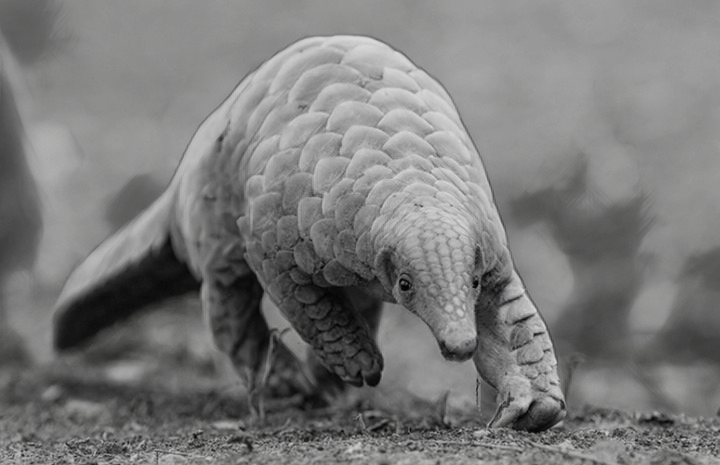
198. The Dog and the Pangolin

Dog and Pangolin were cracking pumpkin-seeds.
Pangolin ate all her kernels, but Dog saved his.
“Why don’t you save the kernels?” Dog asked, and Pangolin fell down dead.
A woman walked by. “How did Pangolin die?”
Dog said, “I asked Pangolin: why don’t you save the kernels?”
When Dog said this, the woman fell down dead.
Dog’s sister walked by. “How did the woman die?”
Dog said, “I told the woman that I asked Pangolin: why don’t you save the kernels?”
When Dog said this, his sister fell down dead.
Terrified by this series of events, Dog never spoke again.

[a Bulu story from Cameroon]


Inspired by: "The Dog and the Pangolin"  in Bulu Tales from Kamerun, West Africa (published in Journal of American Folkklore) by Adolph N. Krug, 1912
Notes: You can read the original story online. It has one more link in the chain: after the woman dies, people speak to the dog and they die, and then the dog's sister comes.


199. The Sparrow and the Parrot

A man died.
Sparrow and Parrot disputed who should inherit the man’s property.
“I lived my whole life with the man,” Sparrow said. “Where he moved, I moved. I always stayed with him.”
“That’s nothing!” Parrot squawked. “The man took me from the tree-tops. When my feathers grew, he made a head-dress which he sold for money that bought him a wife, who had daughters, who got husbands, who gave them children. I am the cause of the wealth of this family; therefore, I should inherit.”
The people ruled in favor of Parrot. “He is the source; he must inherit.”

[a Fang story from Gabon]


Inspired by: "A Question of Right of Inheritance" in Where animals talk: west African folk lore tales by Robert Nassau, 1912.
Notes: You can read the original story online. This Fang story is a brilliant example of a chain tale INSIDE a dilemma tale: wow! The name of the parrot is Koho, and the name of the sparrow is Utati-Mboka


Harvesting the Big Turnip

Grandpa grabbed the turnip. He pulled and pulled; turnip wouldn't budge.
"Help, Grandma!" he yelled. Grandma pulled Grandpa who pulled the turnip; turnip stayed put.
Grandma shouted, "Granddaughter, help!" 
Granddaughter pulled Grandma who pulled Grandpa; turnip didn't move.
"Help, Dog!" called Granddaughter.
Dog pulled Granddaughter who pulled Grandma who pulled Grandpa; turnip still in the ground.
Dog barked, "Cat, help!"
Cat pulled Dog who pulled Granddaughter who pulled Grandma who pulled Grandpa; turnip wouldn't come out.
"Help, Mouse!" meowed Cat.
Mouse pulled Cat who pulled Dog who pulled Granddaughter who pulled Grandma who pulled Grandpa... and the turnip came out!


This is a chain-tale folktale from Russia. Somehow it also became popular with children's book authors, so there are lots of English versions too; just take a look at Internet Archive for examples, like this really charming one: The Gigantic Turnip, with illustrations by the Irish artist Niamh Sharkey. 


I really like this photograph of a children's theater performance in Azerbaijan:


The Drop of Honey

The king, drinking tea on the balcony, spilled a drop of honey.
It fell to the street.
A fly landed on the honey.
Then a spider ate the fly.
A lizard devoured the spider.
A cat grabbed the lizard, and a dog grabbed for it too.
They fought.
The cat's owner came to the cat's defense; the dog's owner likewise.
Their friends and families began fighting. 
The palace guard, sent to quell the violence, sided with the cat faction or dog faction, and the rioting spread.
Then civil war.
And so a kingdom fell... 
because of a drop of honey.


Inspired by: "A Kingdom Lost for a Drop of Honey" in A kingdom Lost for a Drop of Honey and Other Burmese folktales by Maung Htin Aung and Helen G. Trager, 1968.
Notes: You can read the original story online at Internet Archive. I did my own longer version of the story here: The Drop of Honey.

The illustrations by Paw Oo Thet are marvelous!


Rabbit Buys Corn

Cockroach, Rooster, and Fox all grew corn.
"Bring me your corn," Rabbit said. "I'm buying!"
He invited Cockroach to come first. "Here's my corn!" said Cockroach.
Knock-knock. "That's Rooster!" whispered Rabbit. "Quick! Hide under the bed."
"Here's my corn!" said Rooster.
Knock-knock. "That's Fox! Quick! Hide under the bed, and snack on Cockroach if you want!"
"Here's my corn!" said Fox.
Knock-knock. "That's Mr. Man. Quick! Hide under the bed. You can eat Rooster!"
"Hello, Mr. Man!" said Rabbit. "I've got a heap of corn for you to buy. And I'll throw in Fox for free; he's under the bed."


Inspired by: Young Brer Rabbit and Other Trickster Tales from the Americas by Jaqueline Shachter Weiss.
Notes: This story is on p. 24: "The Corn." Weiss notes that the story comes from Brazil. There was one more link in the chain: Wolf came after Fox, but I didn't have room for Wolf too. Compare Anansi Owes Money, which has a chain of Hog, Dog, Monkey, and Tiger. 


~ 196. Anansi and the Pea ~


Anansi found a pea and planted it.
Goat ate Anansi's pea-plant.
"Pay me!" said Anansi.
Goat gave Anansi his horn.
Anansi washed the horn in River, and River took the horn.
"Pay me!" said Anansi.
River gave him a fish.
Anansi met a starving boy. "Give me your fish," the boy said. "Take my whip."
Anansi took the whip.
"Help me!" shouted Tacoomah. "I need a whip to herd my cows."
"Give me a cow," said Anansi.
Anansi got a cow.
From the cow, he got milk; then cheese.
Anansi sold cheese and bought more cows.
All from a pea!


Inspired by: Anansi and Company: Retold Jamaican Tales by Bish Denham
Notes: This is story 17. The Pea That Made a Fortune. The chain is even longer in the original story: a starving woman takes the fish and gives Anansi a shirt, then the boy needs a shirt and that's how Anansi gets the whip.


~ 199. Anansi Takes Pig Home ~


Anansi was taking Pig home, but Pig wouldn't cross the stream.
"I refuse!" said Pig.
"Dog, bite Pig!" Dog refused.
"Stick, beat Dog!" Stick refused.
"Fire, burn Stick!" Fire refused.
"Water, douse Fire!" Water refused.
"Cow, drink Water!" Cow refused.
"Butcher, kill Cow!" Butcher refused.
"Rope, hang Butcher!" Rope refused.
"Rat, gnaw Rope!" Rat refused.
"Cat, eat Rat!"
"Gladly!" said Cat, and Cat scared Rat who scared Rope who scared Butcher who scared Cow who scared Water who scared Fire who scared Stick who scared Dog who bit Pig, who jumped the stream.
Anansi didn't pay anybody for helping either!


Inspired by: Jamaica Anansi Stories by Martha Warren Beckwith
Notes: This is story 138 in the book. Beckwith heard this story from Moses Hendricks; additional information in Beckwith's notes. This is one of the most famous frametales in world folklore, tale 2030. The Old Woman and her Pig. I left out one item: grease, which comes between the rope and the rat. A distinctive Anansi trait in this version is that he needs help moving the Pig along and doesn't want to pay anyone to help him: " Anansi went home safe and without expense." Normally this story is told in cumulative style, but that doesn't fit the 100-word format. Here is how Hendricks does the accumulation:
He saw a Rat. Said, "Do, me good Rat, gnaw this grease, make this grease grease this rope, make this rope hang this butcher, make this butcher kill this cow, make this cow drink this water, make this water out this fire, make this fire burn this stick, make this stick lick this dog, make this dog bite this pig, make this pig jump over this river, make Anansi get home!"


~ 198. Anansi Owes Money ~


Anansi owed money to Hog, Dog, Monkey, and Tiger.
Knock-knock! Anansi let Hog in.
Knock-knock! "That's Dog. He hates you!" said Anansi. "Hide upstairs."
Anansi let Dog in.
Knock-knock! "That's Monkey. He hates you! Hide upstairs. Hog's up there; go on and kill him!"
Anansi let Monkey in.
Knock-knock! "That's Tiger. He hates you! Hide upstairs. Dog's up there; go on and kill him!"
Anansi let Tiger in.
"Monkey's upstairs; go on and kill him!"
Tiger ran upstairs.
Anansi removed the stairs.
When Tiger came down, he broke his neck.
So Anansi ate Tiger, Monkey, Dog, and Hog for dinner.


Inspired by: Jamaica Anansi Stories by Martha Warren Beckwith
Notes: This is story 45 in the book. Beckwith heard this story from Richard Morgan; additional information in Beckwith's notes. This wonderful chain tale features Hog, Dog, Monkey, Tiger, and Lion in the original, but I had to shorten it. I also switched it to be going upstairs; in the original, Anansi dug a ditch for the last victim (Lion).


19. The Elephant and the Sparrow


A raging elephant knocked down a sparrow's nest, killing her chicks.
The mother vowed revenge.
"Help me, Woodpecker!" she said.
"Agreed," said Woodpecker. "Help us, Gnat!"
"Agreed," said Gnat. "Help us, Frog!"
"Agreed," said Frog.
Then Frog told them all what to do.
Gnat buzzed in the elephant's ear; the music made him shut his eyes.
Then Woodpecker stabbed the elephant's eyes so he wanted to jump in the water for relief.
Meanwhile, Frog croaked at the edge of a pit; the elephant ran towards the sound, thinking it was a pond, and he fell in the pit and died.

Inspired by: The Panchatantra, translated by Arthur Ryder.
Notes: It is in Book 1, Story 2. This type of story is classified as ATU 210 Rooster, Hen, Duck, Pin, and Needle.

120. The Brahmin and his Mouse-Daughter


A brahmin rescued a mouse from a hawk and turned her into a girl.
She grew up and needed a husband.
"I want the most powerful husband!" she said.
The brahmin thought Sun was the most powerful.
"Sun, marry my daughter," he said.
"Cloud is more powerful," said Sun. "He covers me."
Cloud said, "Wind is more powerful; he pushes me."
Wind said, "Mountain is more powerful; he blocks me."
Mountain said, "The mouse is the most powerful; he gnaws my foundations."
"Make me a mouse again!" said the girl, and thus she married the most powerful husband: a mouse.

Inspired by: The Panchatantra, translated by Arthur Ryder.
Notes: It is in Book 3, Story 14. This is one of the most famous chain-tales in the world. I have written an interactive version here: The Mouse-Bride.

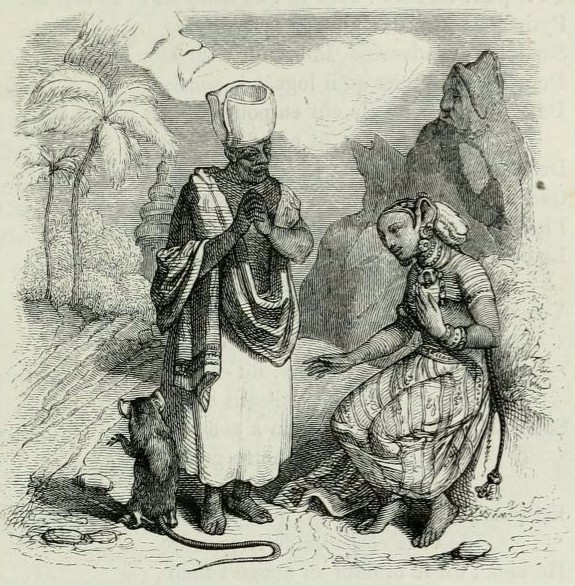
Here is an illustration by Grandville for a version by the French fabulist La Fontaine:


146. The Hermit in the Forest


A hermit had retired to the forest, setting aside all the cares of the world, and a simple loincloth was his only possession.
But rats came and nibbled holes in the loincloth, so the hermit got a cat.
The cat needed milk, so the hermit acquired a cow.
To care for the cow, he employed a cowherd.
The cowherd wanted a house, so he built a house.
To clean the house, he needed a maid.
The maid was lonely living in the forest, so they built more houses.
The result was a village, and all the cares of the world.

Inspired by: Indian Fables by Ramaswami Raju.
Notes: This is one of the "chain tales" that appears in Stith Thompson's motif index. This painting, attributed to the Mughal artist Basawan, circa 1600, shows a Jain ascetic (Wikimedia):