Showing posts with label Nasruddin: not in book. Show all posts

Seha and his Father-in-Law

When Seha was prime minister, jealous courtiers repeated rumors that he was plotting against the king, and they said the same about Seha's father-in-law.
When the king heard these rumors, he was furious and sentenced them both to death, but Seha's wife begged for mercy. "Spare them, O King!" she pleaded.
"I will spare one," said the king. "Tell me who shall it be: your husband, or your father?"
Seha's wife did not hesitate. "Spare my father," she declared. "I can get another husband, but not another father."
Impressed by her devotion, the king spared both Seha and his father-in-law.

Inspired by: "Love and Compassion" in Jewish Folktales from Morocco: Tales of Seha the Sage and Seha the Clown by Marc Eliany, published in 2021. 
Notes: The book is not available online.

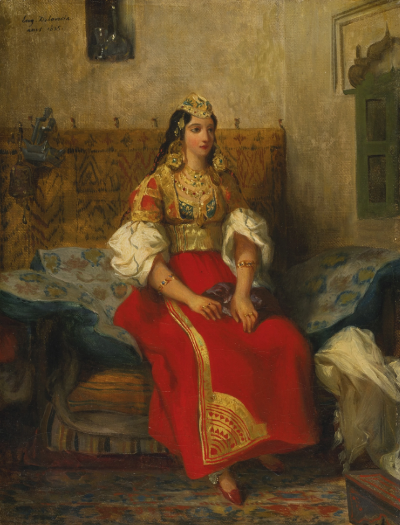
Juive de Tanger by Delacroix


Compassion for the Donkey

The villagers put all their money together to buy a communal donkey.
Then they sent Seha to the market. "Buy a good donkey," they said.
Seha bought a good donkey.
As he walked beside it going home, passersby scoffed, "Look at that fool walking, not riding!"
So Seha rode the donkey.
"He'll drive that donkey to an early grave!" other passersby remarked.
So Seha picked up the donkey and carried it.
The villagers ran to greet thim. "Look at Seha's compassion for the donkey!" they shouted. "We did well to send Seha to the market; he knew what to do."


Inspired by: "Seha's Compassion for Donkeys" in Jewish Folktales from Morocco: Tales of Seha the Sage and Seha the Clown by Marc Eliany, published in 2021. 
Notes: The book is not available online. Compare the famous fable of the father and the son bringing their donkey home from the market: Father and Son and Donkey.


Nasruddin and the Carob Beans

Nasruddin's neighbor came over to see him, dragging an immense sack.
"Nasruddin!" he shouted. "Come look!"
Nasruddin came outside to see what his neighbor was shouting about.
"My cousin came by with a wagonload of carob beans," the neighbor explained. "He gave me several sacks, and since you are such a good neighbor, here is a sack for you."
"Carob beans?" said Nasruddin dubiously.
"Yes!" said the neighbor. "You can chew them; they're sweet."
"Thank you thinking of me," said Nasruddin, "but I'm not interested. It's not worth chewing a ton of wood for an ounce of honey."


Inspired by:  The Wit and Wisdom of Nasraddin Hodja by Nejat Muallimoglu
Notes: This story is on p. 80 of the book. The author comments: "This is said of things when the trouble one goes through doing them is not worth the potential benefit."


Nasruddin's New Teacups

Nasruddin had bought some new teacups and saucers and was carrying them home, awkwardly holding everything in his hands. As he struggled to keep hold of the cups and saucers, he didn't pay attention to where he was walking and stumbled. He fell to the ground, and the cups and saucers came crashing down with him.
When they heard the thud of Nasruddin falling and the sound of the cups and saucers shattering, everyone came to look.
"Nasruddin!" they shouted. "What happened? What's this? What did you do?"
"Stop staring!" Nasruddin shouted angrily. "Haven't you ever seen an idiot before?"


Inspired by:  The Wit and Wisdom of Nasraddin Hodja by Nejat Muallimoglu
Notes: This story is on p. 78 of the book.


Nasruddin's Two Daughters

Nasruddin had two daughters: one was married to a farmer, and the other to a potter.
Nasruddin visited his daughter who was a farmer's wife. "We really need for it to rain," she said. "That way our crops will grow."
The next day, Nasruddin visited his daughter who was a potter's wife. "We really need for the sun to shine," she said. "That way our pots can dry."
On his way home, Nasruddin thoughts to himself, "This is a dilemma: one needs rain, the other needs sunshine. God will have to find a way to grant to each her wish."


Inspired by:  The Wit and Wisdom of Nasraddin Hodja by Nejat Muallimoglu
Notes: This story is on p. 32 of the book. In other versions of this story that I've read, Nasruddin interprets this as a no-win situation: either way, somebody is going to cry. There is also an Aesop's fable like this: The Father and His Two Daughters.


The Dog on a Winter's Night

It was winter, and Nasruddin was traveling to see a friend who had moved to a distant town.
He arrived at the town in the night, and he was looking for the house of the friend. As he wandering along the street, a dog came running towards him. The dog was barking, and looked dangerous. Nasruddin reached down to pick up a stone, but it was frozen to the ground, or so Nasruddin thought (it was a cobblestone street).
"This is a very strange place!" Nasruddin exclaimed. "The stones are tied up, but the dogs are allowed to roam free."


Inspired by:  The Wit and Wisdom of Nasraddin Hodja by Nejat Muallimoglu
Notes: This story is on p. 16 of the book. The story here does not mention that it was a cobblestone street, but from other "folktales about fools," this type of story is usually told about someone who doesn't understand what a cobblestone street is, and who thinks instead that the stones are frozen to the ground.


Nasruddin and the Sieve

Nasruddin was in the pantry when a sieve full of potatoes fell on his head. The sieve and potatoes hit him right on the head, and it really hurt.
Nasruddin was angry and went to kick the sieve, but when he did that, the sieve bounced up and hit him in the face.
Now Nasruddin was furious. He ran into the kitchen and grabbed his biggest butcher knife. Then he ran back into the pantry and shouted, "Alright, sieve! I'm ready! You and all your sieve allies can attack me know and I'll cut you to shreds with my knife!"


Inspired by:  The Wit and Wisdom of Nasraddin Hodja by Nejat Muallimoglu
Notes: This story is on p. 15 of the book.


Nasruddin and the Ghost in the Moonlight

Nasruddin looked out the window, and in the moonlight he saw something, or someone, moving. It looked like a ghost raising its arms, dancing some kind of strange dance.
Terrified, Nasruddin grabbed his bow and shot an arrow at the ghost. "Got it!" he shouted. The arrow had pinned the ghost to a tree.
But when Nasruddin rushed outside to investigate, he saw that he had shot his own cloak which his wife had washed and hung on the clothesline to dry.
"Praise God!" said Nasruddin. "If I'd been wearing the cloak, I would have killed myself with that arrow!"


Inspired by:  The Wit and Wisdom of Nasraddin Hodja by Nejat Muallimoglu
Notes: This story is on p. 7 of the book.


Nasruddin and His Brother

When Nasruddin first went to school, the teacher asked him some questions.
"Tell me, Nasruddin: do you have any brothers or sisters?"
"I have one brother!" Nasruddin replied with pride.
"And is your brother older or younger than you?" the teacher asked.
"Well," Nasruddin said thoughtfully, "I remember that last year my brother was one year younger than me. At least, that's what my mother told me."
"So he's your younger brother," said the teacher helpfully.
"I'm not sure,"said Nasruddin. "That was a year old, so he may have caught up to me in age by now."


Inspired by:  The Wit and Wisdom of Nasraddin Hodja by Nejat Muallimoglu
Notes: This story is on p. 3 of the book.


Nasruddin's Son Has a Dream

"I had a marvelous dream, Father!" said Nasruddin's son. "You and I were standing in a field, and angels descended from heaven, singing your praises because you are so virtuous and generous. Then you looked at me and asked me if I needed anything, and I told you I needed three silver coins."
"Did I give you the coins?" asked Nasruddin.
"Yes!' the boy said fervently. "You gave me three silver coins."
"Well, since you are such a good boy," said Nasruddin, "you can keep the coins I gave you."
Nasruddin's son is sly, but not more sly than Nasruddin.


Inspired by: Classic Tales of Mulla Nasreddin retold by Houman Farzad, and translated by Diane Wilcox
Notes: This story is on p. 82 of the book.


The Donkey's Barley

"Your donkey sure is looking scrawny these days," said Nasruddin's neighbor.  "Maybe you need to give him some more food."
The donkey, as if he understood what the neighbor was saying, wriggled his ears in agreement.
Nasruddin huffed indignantly. "I'll have you know that the donkey's ration is two bushels of barley every day. Two full bushels!"
"Well, that's strange," said the neighbor. "That's very strange. With a ration like that, your donkey shouldn't be looking so thin. I wonder what the problem is."
"The problem," explained Nasruddin, "is that I now owe him about a month's worth of barley."


Inspired by: Classic Tales of Mulla Nasreddin retold by Houman Farzad, and translated by Diane Wilcox
Notes: This story is on p. 54 of the book.


Nasruddin and the Mutton

The rumor was that Nasruddin had stolen a sheep which he then slaughtered.
He then gave away all the meat to the poor and hungry.
"I don't understand," said Nasruddin's friend. "Why would you run such a risk and commit such a crime if you were just going to give the meat away like that?"
Nasruddin smiled and said, "I reckon it this way: God's reward for an act of charity balances out the punishment for stealing. Then, I sold the fat and I sold the skin, which is how I made a profit out of the whole business."


Inspired by: Classic Tales of Mulla Nasreddin retold by Houman Farzad, and translated by Diane Wilcox
Notes: This story is on p. 54 of the book.


Nasruddin's Bargain with God

Nasruddin's donkey was missing, so he decided to bargain with God.
"O God," he prayed, "if you will bring back my donkey, I promise to donate ten gold coins to the mosque."
Sure enough, Nasruddin's donkey came back.
"O God," he prayed again, "I see you are both honorable and also powerful. Since you found my donkey and brought him back, do you think you could help me find some buried treasure? Maybe a treasure chest full of gold coins? I'll double my donation to the mosque if you can help me with that like you did with the donkey!"


Inspired by: Classic Tales of Mulla Nasreddin retold by Houman Farzad, and translated by Diane Wilcox
Notes: This story is on p. 50 of the book.


Nasruddin's Shield

When Nasruddin was in the army, his unit attacked an enemy fortress. Carrying a shield and waving a spear, Nasruddin advanced towards the line of enemy soldiers who were defending the fortress.
Then, all of a sudden, one of the soldiers threw a rock which hit Nasruddin on the head.
Nasruddin reached up and felt blood trickling from his head wound.
"You idiot!" he yelled at the enemy soldier. "You could have aimed at this nice big shield which is easy to see and easy to hit. Why on earth would you aim at my poor little head like that?"


Inspired by: Classic Tales of Mulla Nasreddin retold by Houman Farzad, and translated by Diane Wilcox
Notes: This story is on p. 12 of the book.


Nasruddin and the Drunkard

As Nasruddin was on his way home one evening, a man ran right into him and knocked him down.
"I am... I am so sorry," the man said as he helped Nasruddin get back up. From his slurred speech Nasruddin could tell the man was drunk.
"It's not even dark yet!" Nasruddin yelled. "How is it possible that you did not see me?"
"Oh, I saw you," said the drunken man. "In fact, I saw two of you."
"Then why did you run into me like that?"
"Well," replied the drunken man, "I was trying to go between you."


Inspired by: Classic Tales of Mulla Nasreddin retold by Houman Farzad, and translated by Diane Wilcox
Notes: This story is on p. 12 of the book.


Noah and the Dove

Nasruddin and his friends in the coffeehouse were arguing, again. This time they were arguing about details of religious tradition. Nasruddin claimed to be an expert, so his friends were challenging him with obscure questions about the prophets and their lives.
"Tell us about Noah's dove, Nasruddin! Was the dove that brought back the olive branch in its beak a male dove or a female dove?"
"A male dove, obviously," answered Nasruddin.
"How can you be so sure?"
"Because a female dove would never have been able to keep her mouth shut long enough to bring back the olive branch."


Inspired by: Nasreddin Hodja: The Turk Who Makes the World Laugh by Mehmet Ali Birant
Notes: This story is on p. 24 of the book.


A Recipe for Halvah

"Halvah is my favorite food," said Nasruddin. "But I rarely get to eat it."
"You should make some at home," said his friend. "You just need flour, butter, and sugar."
"I never have all the ingredients at once! If I've got butter and flour, there's no sugar. Or maybe I have sugar and butter but no flour. Or I've got flour and sugar, but no butter."
"But surely at some time you had flour and sugar and butter in the house!"
"Perhaps." Nasruddin sighed. "But in that case, I must have been the missing ingredient who was not at home."


Inspired by: Nasreddin Hodja: The Turk Who Makes the World Laugh by Mehmet Ali Birant
Notes: This story is on p. 20 of the book. There are different kinds of halvah; the kind Nasruddin is talking about is Turkish Flour Halvah. The other kind of halvah is made with tahini: Tahini Halvah.


Nsaruddin and the Rooster

Nasruddin was carrying a basket full of live chickens to sell at the market. It was a hot day, and he felt sorry for the birds stuffed inside that basket, so he decided to let them out to walk and enjoy the breeze.
When he lets the chickens out, though, they all start running this way and that.
Nasruddin then yelled at the rooster, "Hey there, rooster! You're the man of this family. Do something! You're always bossing everyone around by telling us when to get up in the morning. Now you need to drive those hens to the market!"


Inspired by: The Best Anecdotes of Nasreddin Hoca by Kemal Yorenc
Notes: This story is on p. 74 of the book.


The Donkey's Tail

Nasruddin was taking his donkey to the market to sell. On the way, though, the donkey stumbled and slipped in some mud. Nasruddin scraped off what he could, but the donkey's tail was still full of mud. Since Nasruddin was in a hurry, he cut the tail off and put it in the saddlebag.
"This is a fine-looking donkey," said a prospective buyer as he inspected the donkey. "But wait! What's this? His tail is missing!"
Nasruddin lifted the flap of the saddle-bag to show him the tail. "If you buy the donkey, I'll throw in the tail for free!"


Inspired by: The Best Anecdotes of Nasreddin Hoca by Kemal Yorenc
Notes: This story is on p. 69 of the book.


In Public, In Private

Nasruddin was eating a piece of bread while he was walking around town. This was back in the old days, when people were not used to seeing someone who was eating while he was walking.
"Why are you eating that bread out here where everyone can see you?" someone asked. "Isn't that a strange thing to do?"
Nasruddin shook his head. "There's nothing strange about it." Nasruddin took a bite of bread, and then he continued, "If something is not strange when you do it alone, why should it be strange if you do it in front of other people?"


Inspired by: The Best Anecdotes of Nasreddin Hoca by Kemal Yorenc
Notes: This story is on p. 41 of the book. A friend of mine from Italy stayed with me one summer while she was taking a summer school course and she said one of the strangest things she saw in America was people eating while they were walking around.